
The Evidence That Condemns Dmitri
The Brothers KaramazovThis flow tracks the physical and testimonial evidence that persuades the court, even though its central inference is wrong.
increasing Bearing strength in each event
 decreasing
Bearing strength in each eventdecreasingBlood and the Pestle

A visible trail
The garden encounter
Dmitri strikes Grigory while escaping Fyodor’s garden. He leaves a bloodied handkerchief and the brass pestle on the path.
Meaning assigned afterward
Dmitri’s blood, the weapon, and his admitted presence become a single narrative of parricide. The actual murder weapon is not the pestle, but the evidence leads investigators toward Dmitri.
The Three Thousand Roubles
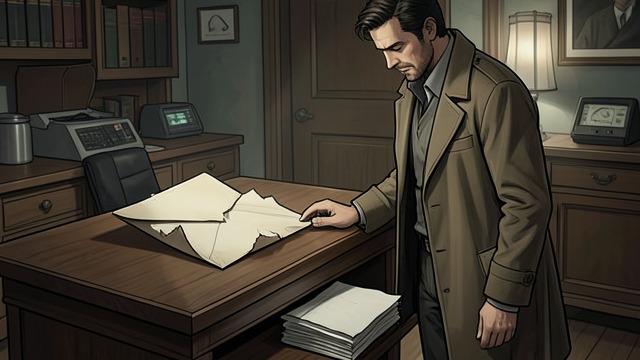
Money becomes motive
An empty envelope
Investigators find Fyodor’s torn envelope, marked for Grushenka, but no money. Dmitri has a bundle of notes and has repeatedly spoken of needing three thousand roubles.
A disputed source
Dmitri claims that the money came from the half he had secretly retained from Katerina’s loan. He refuses to reveal the details at first, making his explanation appear less credible than the robbery theory.
A Convincing but False Story

Cumulative suspicion
The prosecution’s case
The prosecutor presents motive, opportunity, the weapon, and the money as parts of one premeditated act. Dmitri’s own written threat seems to complete the pattern.
The defense’s warning
Fetyukovitch argues that no single item proves murder and that the case relies on a story assembled from ambiguous facts. The jury nonetheless returns a guilty verdict, illustrating how a plausible narrative can overwhelm uncertainty.
the night of Fyodor’s murder
the preliminary investigation and trial
the closing arguments and jury deliberation
